
Removal Of Damaged Materials After Water Damage
Author; S.Raj, M.D, Updated: 8/12/2026 Reading Time: 5 Minutes
What Homeowners Should Expect
Imagine coming home to find your floors soaked from a burst pipe, or seeing water creeping up the walls after a hidden leak. The panic is natural—but what happens next is crucial for your home’s future safety and value. Many homeowners ask, “Will everything need to be torn out?” The answer isn’t always simple, but understanding the removal of damaged materials after water damage can help you navigate the restoration process with confidence.
What You’ll Learn About Removal of Damaged Materials After Water Damage
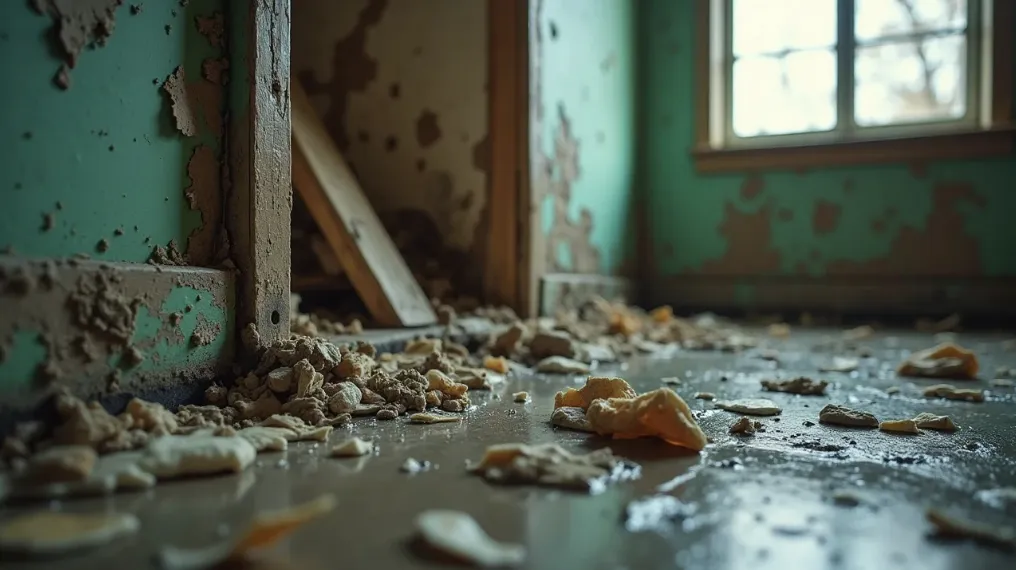
Definition and role of damaged material removal in water damage restoration
Why some building materials cannot be restored
How professionals decide what to remove
Homeowner preparation steps
What to expect after damaged materials are removed
Introduction to Damaged Material Removal After Water Damage
Sudden water intrusion—a pipe bursts, a washing machine overflows, or stormwater floods your basement—leaves many wondering about the extent of needed repairs. When you’re faced with soaked walls and spongy flooring, you aren’t just dealing with a mess; you’re facing decisions that directly affect your home’s safety and your family’s well-being.
In some scenarios, restoration professionals can dry and clean materials in place. But often, the safest and most effective path is to remove materials that have been irreparably compromised. This process, though sometimes mistaken for unnecessary demolition, is about creating a clean foundation for repairs and preventing hidden moisture-related problems such as mold growth or structural instability. Remember, thorough assessment—not hasty destruction—guides each step of a proper water damage restoration process.
Professional removal of damaged materials helps eliminate compromised building components and prepares the property for safe restoration and repairs.
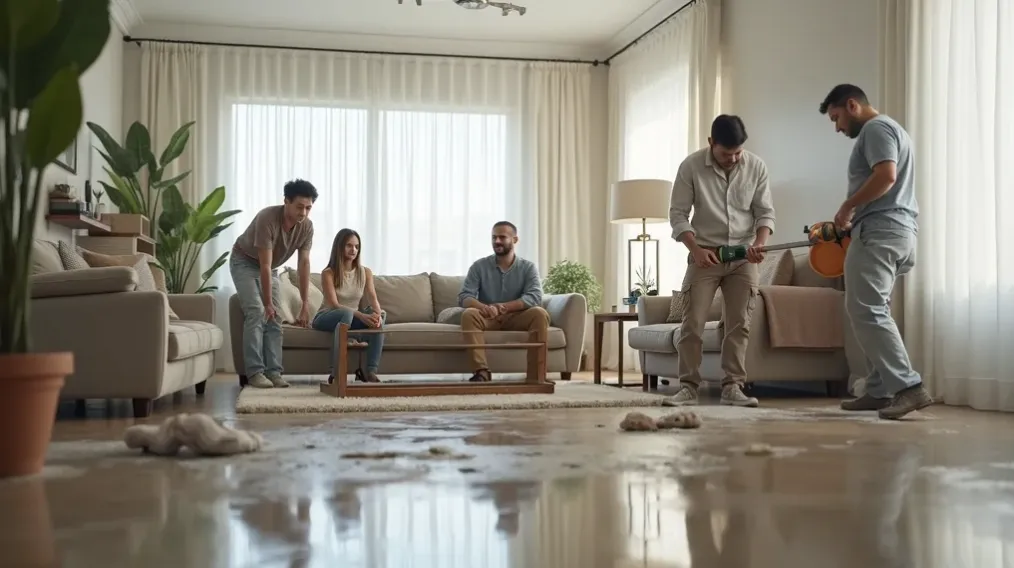
Scenario: A plumbing leak leaves walls and flooring soaked—does everything need removal? Not always. Only materials beyond safe recovery are removed.
Professionals decide between restoration and removal based on material type, water contamination, and damage extent.
Key Takeaway: Damaged material removal isn’t synonymous with demolition—it’s targeted, safety-focused, and ensures effective repairs.
What Is Damaged Material Removal in the Water Damage Restoration Process?
Defining Damaged Material Removal
Damaged material removal in the water damage restoration process refers to the targeted removal and disposal of building materials—like drywall, flooring, insulation, carpet, and paneling—that cannot be safely cleaned, dried, or restored. This step is performed by trained restoration professionals who inspect each affected area using specialized tools, such as a moisture meter, to determine which materials are unsalvageable and pose risks to health or structural integrity.
Unlike general demolition, this process is focused: Only materials compromised by water, contamination, or extensive mold growth are removed. The careful extraction of these elements is crucial for removing hidden moisture, eliminating health risks, and preparing your home for thorough and lasting repairs offered by reputable restoration services.
Purpose of Water Damage Material Removal
The primary goal of water damage material removal is to create a safe environment for recovery and prevent further deterioration. Water-damaged materials—especially porous materials—can harbor bacteria, facilitate hidden mold growth, and damage your home’s framework long after the visible water is gone. By removing what cannot be dried or cleaned, restoration specialists prevent ongoing health risks, facilitate drying of structural components, and support effective restoration for your property’s long-term well-being.
Difference Between Cleaning, Drying, and Material Removal
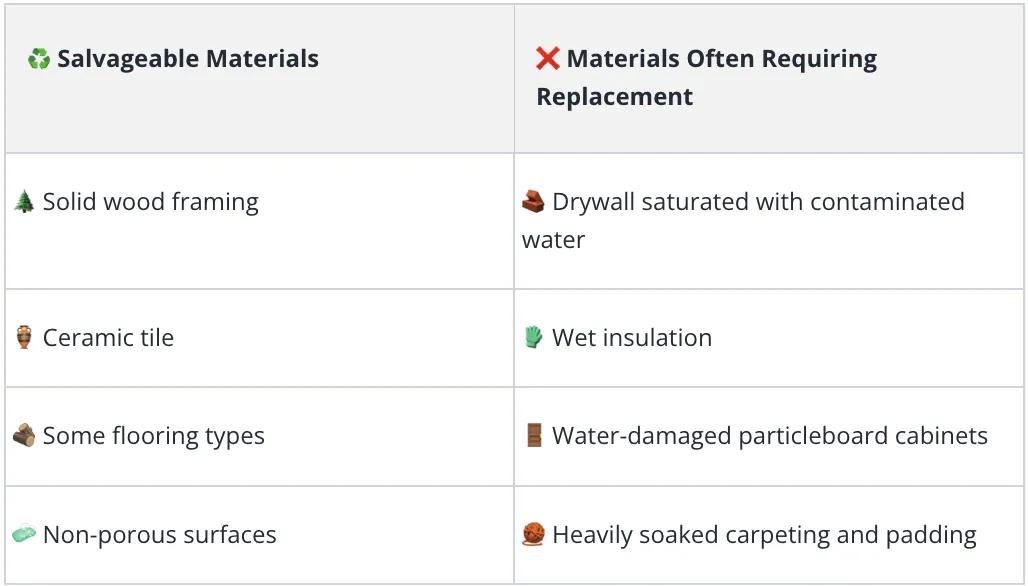
Not every item exposed to water needs to be removed. Cleaning involves sanitizing surfaces without removal, while drying uses dehumidifiers and fans to evaporate residual moisture. Removal becomes necessary when materials cannot return to a safe, usable condition even after these steps. For example, non-porous surfaces (like tile) can often be cleaned and dried, but water damaged drywall, wet insulation, or persistent mold will usually prompt removal to prevent deeper issues.
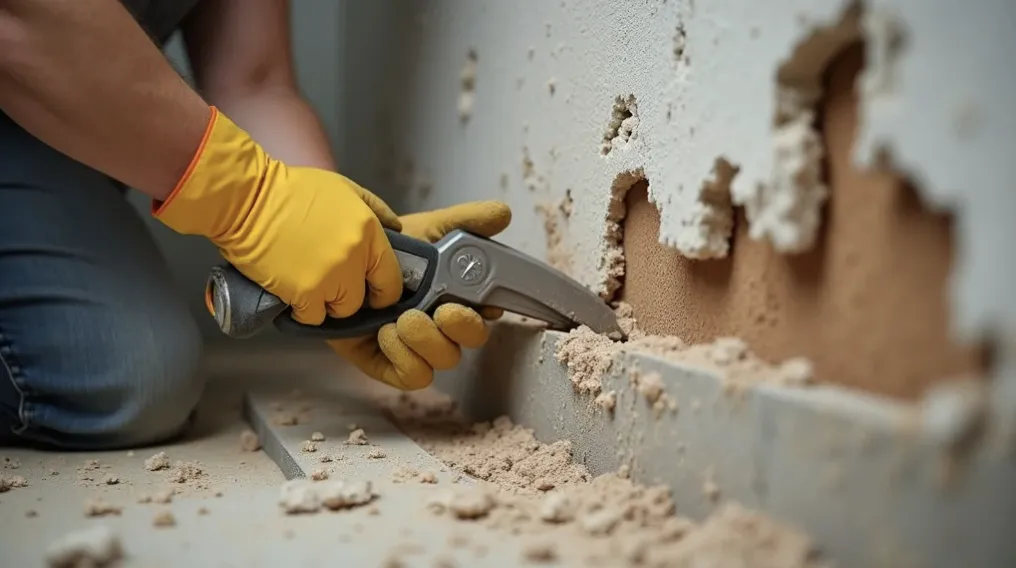
Comparison: Water damage is not just about visible stains; hidden moisture may support mold growth and structural decay. Restoration experts use moisture meters and their trained experience to target only what must be removed, striking a crucial balance between salvaging and replacement.
Drywall, flooring, or insulation damaged by gray water or contaminated sources require more aggressive action than materials affected by clean water alone.
For homeowners interested in a deeper understanding of how restoration professionals assess and address hidden moisture, exploring the detailed process outlined in the water damage restoration process can provide valuable context on the steps taken to ensure your property is thoroughly protected.
Why Damaged Materials May Need To Be Removed After Water Damage
Irreversible Damage: When Materials Can’t Be Restored
Some building materials simply can’t be salvaged after water exposure. Materials like drywall, insulation, and carpet padding readily absorb water but retain it for long periods, increasing the risk of swelling, breakdown, and mold growth. Once compromised, their structural integrity and cleanliness can’t be restored through drying alone. If materials were exposed to category 2 (gray water) or category 3 (sewage backup) water, removal is almost always necessary, as contaminants linger deep within pores and fibers, presenting ongoing health risks.
Risks of Hidden Moisture in Building Material Removal
Water doesn’t always stay where you see it. Trapped moisture behind baseboards, within wall cavities, or underneath floors can cause subtle but destructive structural damage over time. This hidden moisture not only jeopardizes recovery but also sets the stage for future mold growth that may not surface until weeks or months later. By removing affected materials, especially those that block airflow or cannot be fully dried, restoration experts eliminate hidden reservoirs and help protect your investment from long-term decay.
Structural and Health Concerns: Mold Growth, Contaminants
Water-damaged materials, especially those exposed to contaminated water or prolonged dampness, are prime locations for rapid mold growth. Mold not only affects air quality but can also undermine wooden framing and drywall, causing persistent issues that traditional cleaning and drying cannot solve. Timely, targeted material removal is a cornerstone of both mold remediation and overall damage restoration. Additionally, contaminants from sewage backups introduce bacteria and pathogens that render materials unsafe, requiring their immediate removal for your family’s health.
Ensuring a Clean Surface for Water Damage Repairs
Before any effective restoration or rebuilding, surfaces must be thoroughly clean, dry, and stable. Leaving behind weakened, wet, or contaminated building components risks reoccurring problems and undermines the longevity of new installations. The removal of unsalvageable materials ensures that only sound, healthy structure remains—delivering a proper foundation for new drywall, flooring, or other repairs completed by your chosen restoration service.
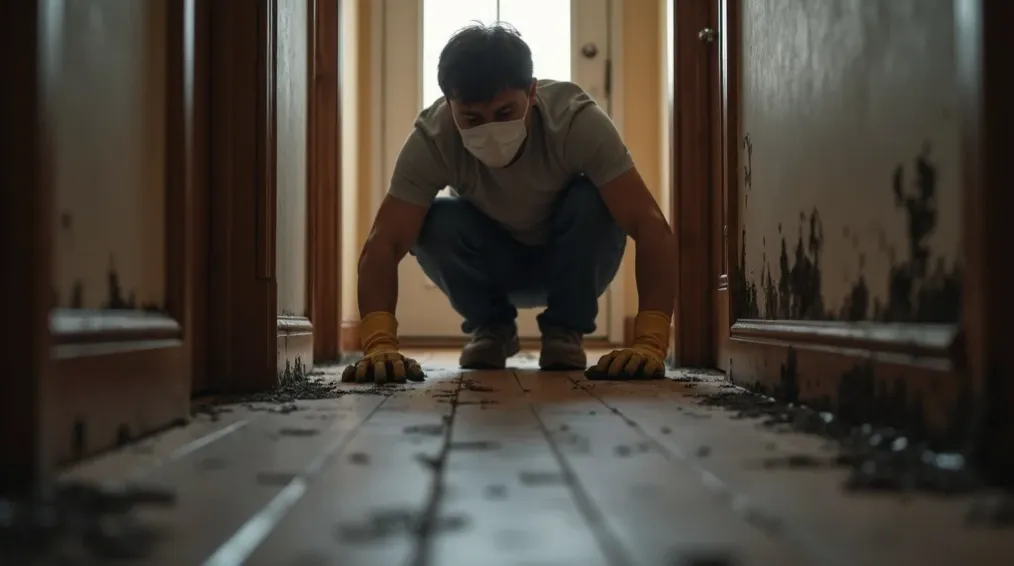
Water damage can be invisible but dangerous, leading to mold remediation if missed.
Any material that cannot be completely dried or decontaminated—especially after standing water or gray water exposure—should be considered for removal.
How Professionals Decide What Materials To Remove After Water Damage
Assessment Factors: Water Type, Exposure Duration, and More
Restoration companies use a systematic process to determine which materials require removal after water damage. Assessment begins with identifying the type of water (clean, gray, or black/contaminated), as this influences contamination risk and salvageability. The longer materials stay wet, the more likely they experience structural damage or mold. The material itself—its porosity, construction, and location—also informs the decision: for example, solid wood framing may be dried and saved, while saturated carpet padding or drywall often must go to safeguard against hidden threats.
Moisture Levels and Structural Condition Assessment
Specialists use moisture meters, thermal cameras, and direct inspection to map the extent of wetness and investigate hidden cavities. If a material retains high moisture despite drying efforts, or exhibits warping, swelling, or softening, removal is usually recommended. This careful, data-driven process ensures only truly damaged material is removed, minimizing unneeded demolition while prioritizing health and safety.
Dealing with Category 2 and 3 Water Contamination
If the water source was gray water (from appliances or sump pump failures) or black water (sewage or floodwater), porous materials almost always require removal due to contamination that cleaning cannot reach. Restoration companies may work closely with homeowners and insurance adjusters at this stage, and often rely on industry guidelines to determine which building materials must be categorized as unsalvageable materials for legal, health, and insurance purposes.
The Restoration Company’s Decision Process
The structured approach to material removal during the restoration process typically follows these stages:
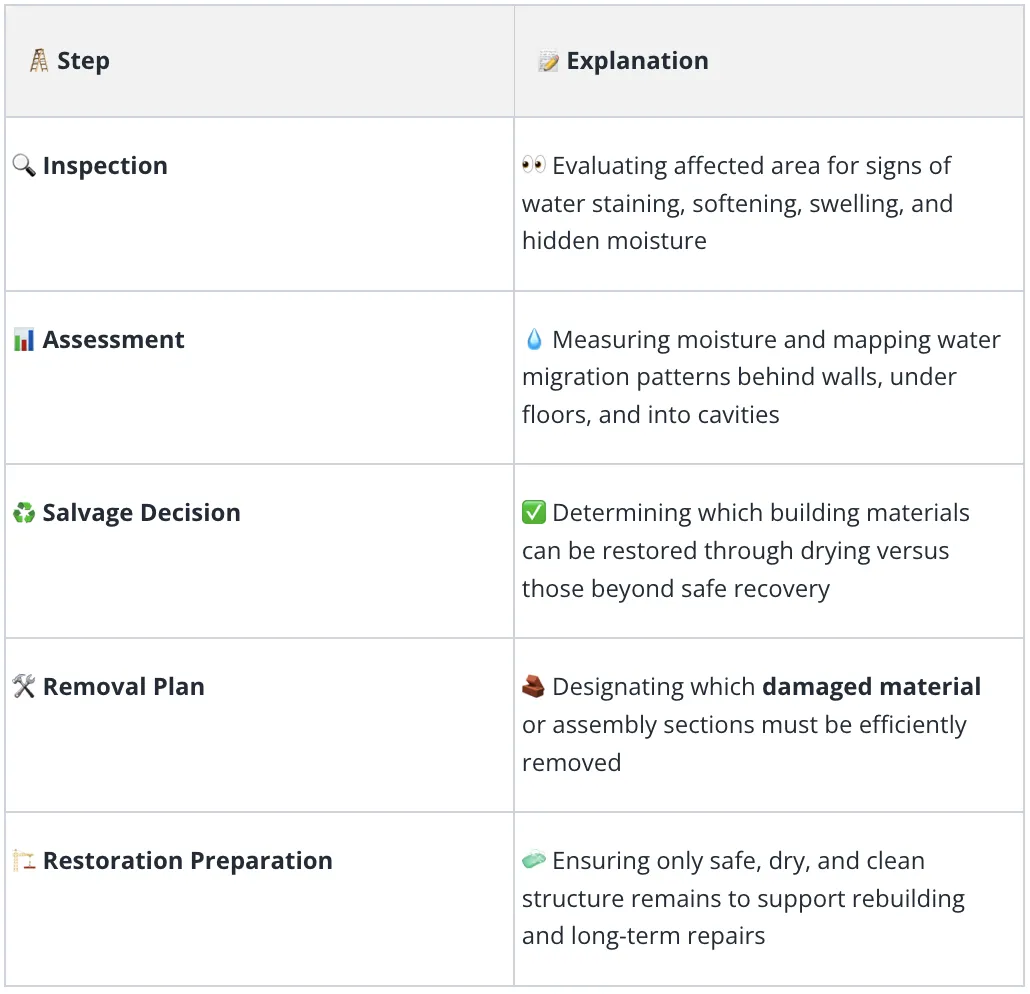
Common Materials Removed After Water Damage: A Homeowner’s Guide
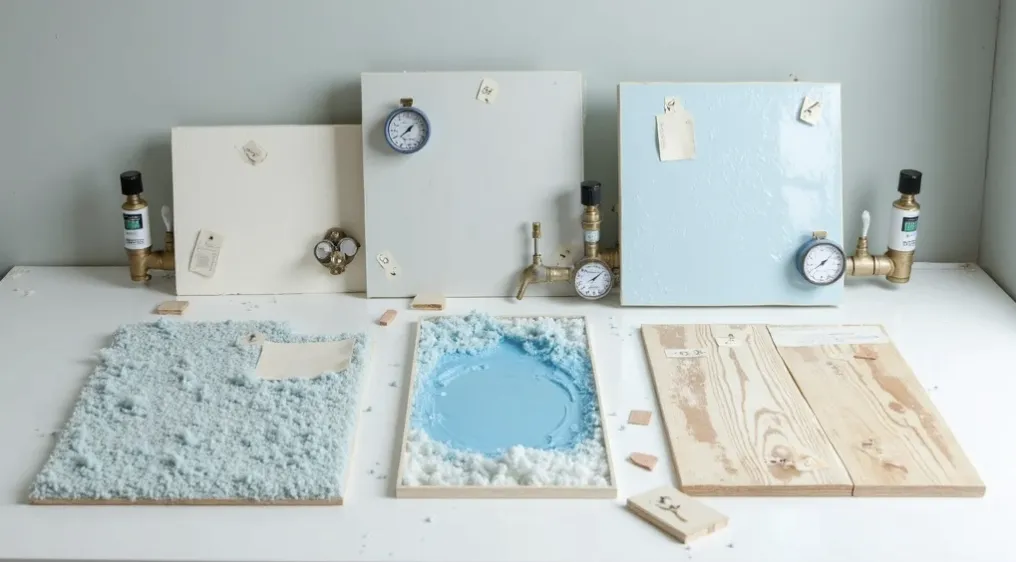
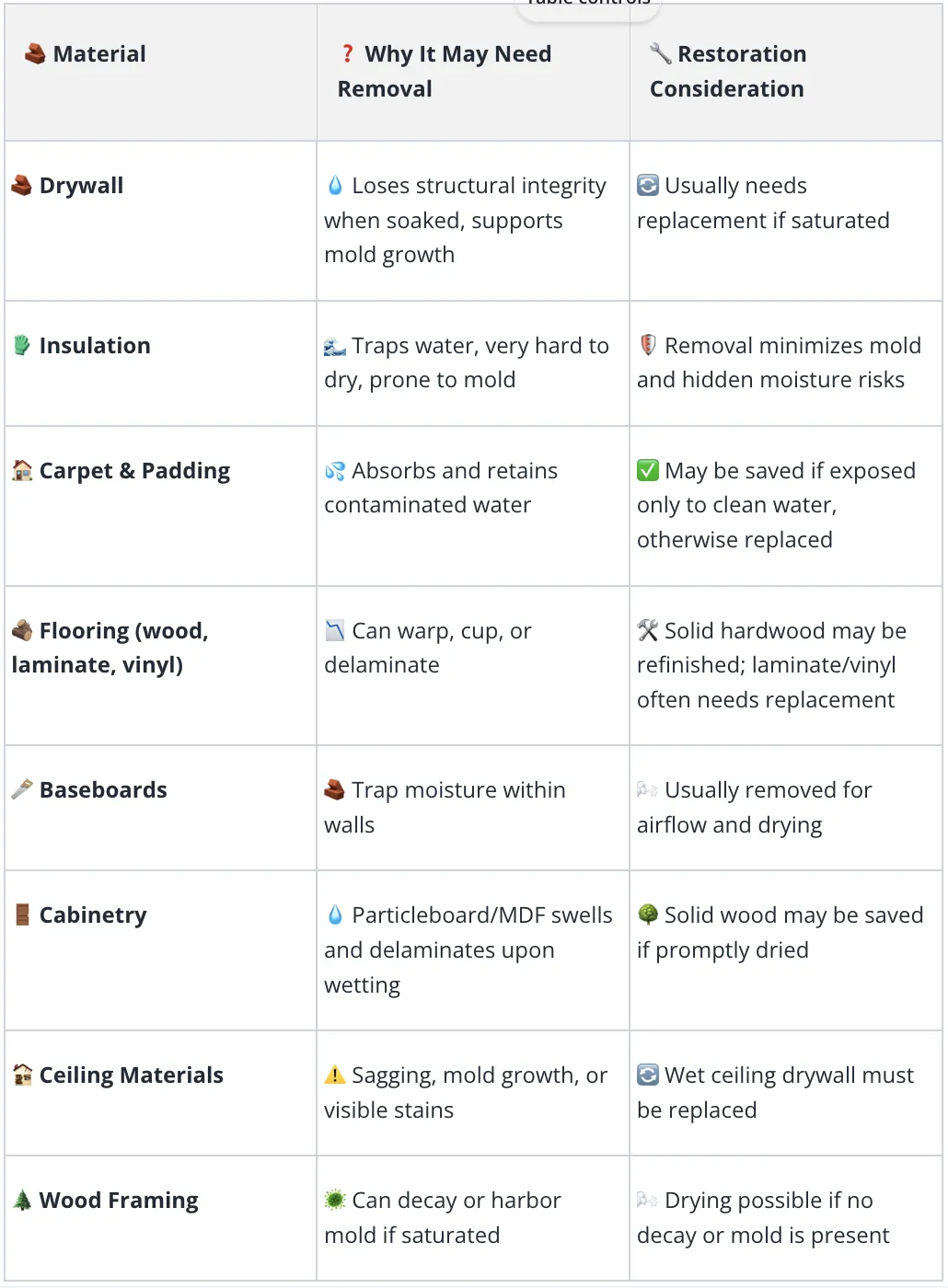
Knowing which materials are typically removed after water damage can help you set realistic expectations for your project. While each scenario is unique, some building components are more vulnerable to water and often require removal for safety and code compliance.
What Is Controlled Demolition in Water Damage Restoration?
Purpose and Method of Controlled Demolition After Water Damage
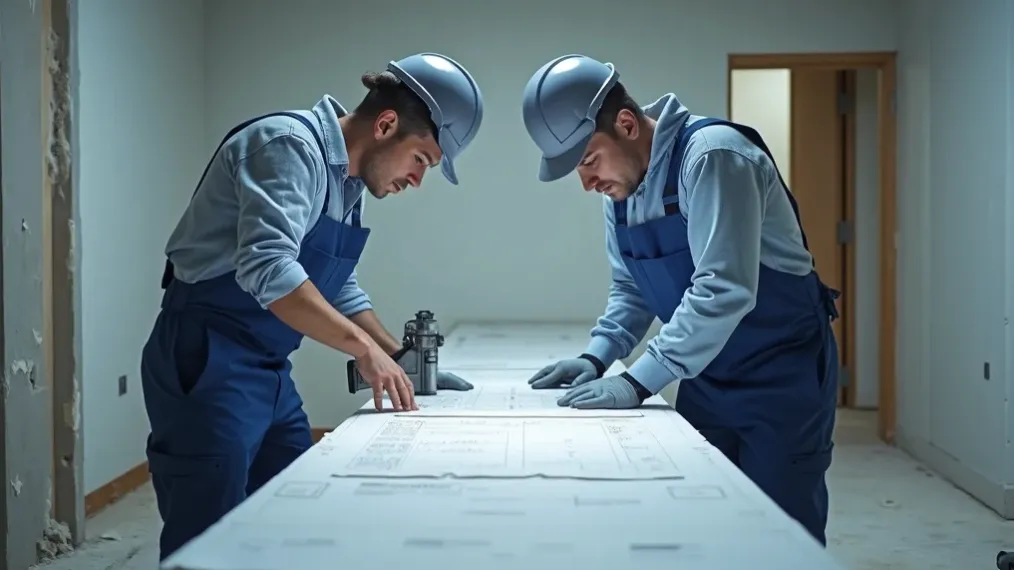
Controlled demolition is a focused, strategic removal process. Unlike random or large-scale demolition, controlled demolition uses precision tools and techniques to eliminate only the unsalvageable materials required to facilitate drying, cleaning, and restoration. Restoration professionals methodically remove parts of walls, flooring, or other assemblies as needed—leaving untouched components in place to reduce unnecessary rebuilding costs and time.
Selective Removal to Prevent Unnecessary Damage
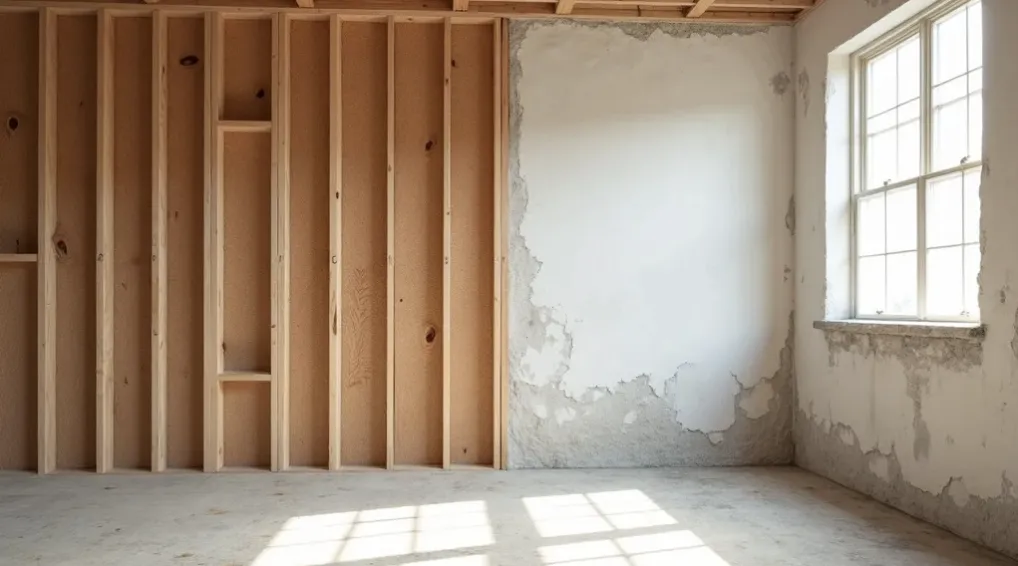
Rather than demolishing an entire wall, a restoration team may cut out a horizontal strip of drywall just above the water line (“flood cuts”) or remove only the portion of flooring that sustained irreversible water damage. This approach protects historical or valuable building elements wherever possible, and helps streamline the damage restoration process.
Safety Precautions in Controlled Demolition
Safety is central to controlled demolition after water damage. Restoration teams wear protective equipment, use dust containment barriers, and may set up negative air pressure machines to keep potentially harmful particles from spreading beyond the affected area. Homeowners may be asked to vacate or avoid specific work zones while removal takes place. Documentation, before-and-after photos, and open communication with your restoration company ensure peace of mind throughout the process.
The controlled demolition workflow is simple: Inspect → Mark removal zones → Protect unaffected areas → Carefully cut & extract → Contain debris → Prepare for drying and repairs.
Homeowner reassurance: Only the minimum necessary materials are removed for safety and restoration effectiveness.
Salvage vs Replacement: How Restoration Decisions Are Made
Assessing Condition, Drying Potential, and Contamination
Each restoration decision takes a careful look at the condition of the material, its potential for successful drying, and the type or level of contamination it experienced. Materials like ceramic tile and solid wood can often be disinfected and dried if caught early. In contrast, drywall, insulation, and carpet exposed to contaminated water are rarely salvageable. The ultimate aim is to retain what’s safe and healthy and remove all that compromises your home.
Structural Integrity and Decision-Making by Restoration Services
Restoration specialists look for telltale signs—warping, crumbling, persistent moisture, or visible mold—before removing any material. Their experience and use of accurate moisture testing allow for selective removal that protects both your property and your budget. This careful process ensures your home’s rebuilt surfaces have proper support from the ground up.
Preparing Your Home Before Damaged Material Removal Begins
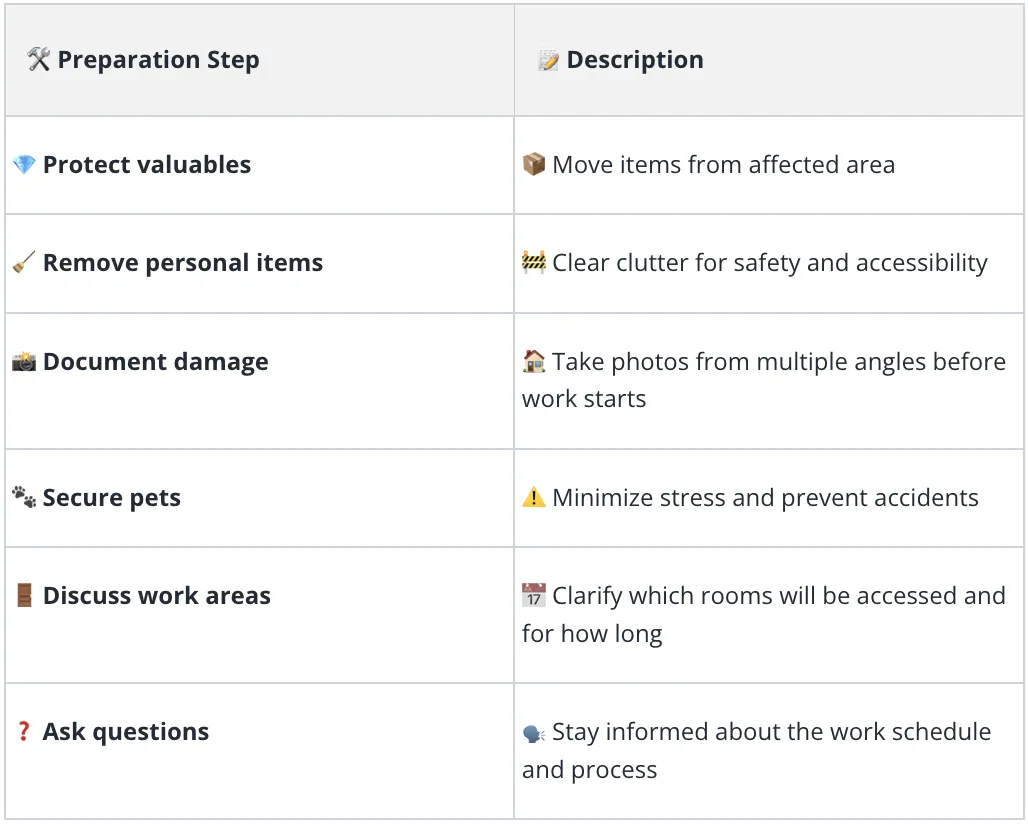
Protect or remove valuables from affected area
Remove personal items and fragile goods
Document all visible water damage for insurance claims
Secure pets and ensure safe access for the restoration crew
Discuss work areas and daily schedules with the company
Prepare questions about the restoration process
Common Homeowner Mistakes During Water Damage Demolition
Refusing professional recommendations for necessary removal
Attempting water damage demolition without assessment
Beginning cosmetic repairs before systems are dry
Covering up damaged drywall or flooring rather than removing it
Ignoring lingering, hidden moisture that can foster mold growth

What Happens After Damaged Materials Are Removed in the Restoration Process?
Cleaning and Sanitization of the Affected Area
Once damaged materials have been safely removed, the affected area is thoroughly cleaned and sanitized to eliminate all remaining contaminants, dust, and debris. Restoration professionals use specialized antimicrobial agents and HEPA vacuums to ensure the space is safe for drying, repairs, and occupancy. This cleaning stage is particularly important when contamination from gray or black water was present, or if mold growth was discovered during removal.
Drying Verification and Moisture Testing
High-capacity air movers and commercial dehumidifiers are brought in to dry remaining structure rapidly and effectively. Professionals continue to monitor moisture levels with calibrated moisture meters to ensure no dampness remains inside walls, under floors, or behind other finishes. Only when all surfaces reach safe, industry-standard dryness levels is the home considered ready for reconstruction.
Reconstruction Planning and New Material Installation
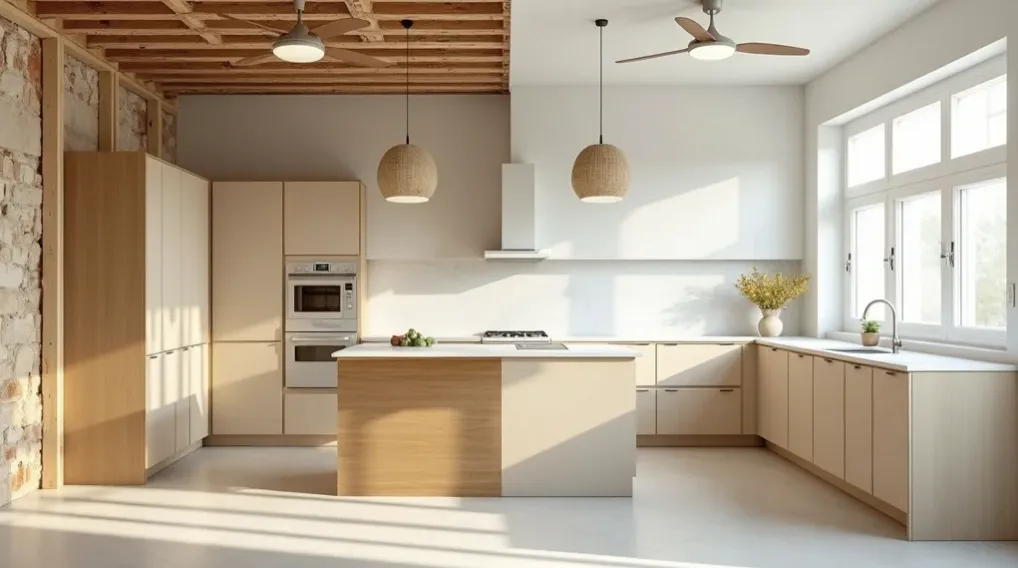
Reconstruction typically involves installing new drywall, insulation, flooring, and baseboards; repainting and sealing surfaces; and reassembling removed cabinetry or trims. This phase transforms your home back to its pre-damage condition and is scheduled once complete dryness and cleanliness are confirmed. The restoration company will often review the plan and potential upgrades with you before work begins.
Final Inspection by Water Damage Restoration Professionals
As a final step, certified restoration professionals perform a detailed inspection to ensure all repairs meet safety, building code, and industry expectations. Moisture readings are retaken, and a walkthrough is performed with the homeowner. This confirmation gives you peace of mind that the restoration process has successfully restored health and habitability.
Before-and-after scenarios: Contrast exposed framing and drying equipment with the final, finished surfaces to visualize the restoration journey.
Key Takeaway: Complete removal of unsalvageable or contaminated materials, paired with validation of dryness, is crucial for safe, long-lasting home repairs.
People Also Ask: Removal of Damaged Materials After Water Damage
Why do restoration companies remove damaged materials?
Restoration companies remove damaged materials to eliminate health hazards, stop structural deterioration, and allow proper cleaning and rebuilding. This process helps ensure your home is safe, dry, and free from lingering problems such as hidden mold or contaminants—a crucial step in the water damage cleanup process.
What materials are usually removed after water damage?
Commonly removed materials after water damage include soaked drywall, insulation, carpet padding, warped or delaminated flooring, damaged cabinetry, ceiling tiles, and any unsalvageable wood framing. The decision depends on water source, duration, and contamination level.
Does water damaged drywall need to be replaced?
Often yes. If drywall has absorbed much water, especially from contaminated or standing water, it can lose strength and support mold growth. In many cases, water damaged drywall removal is necessary to ensure thorough drying and prevent long-term health risks.
Can water damaged flooring be saved?
Some flooring types, like solid hardwood or ceramic tile, can sometimes be dried and refinished if clean water is involved and action is swift. Laminate, vinyl, and carpet padding typically require replacement if waterlogged. Restoration professionals make this decision during a thorough inspection.
What is controlled demolition after water damage?
Controlled demolition is the selective, planned removal of only the materials that cannot be saved after water damage. It minimizes unnecessary destruction—removing, for example, just the saturated drywall up to the waterline—while preserving as much original structure as possible.
How do professionals determine if materials can be restored?
Restoration professionals use moisture meters, visual inspection, and knowledge of material properties to evaluate if an item can be dried, cleaned, and remain structurally sound. Materials contaminated or compromised beyond safe recovery are marked for removal.
How long does water damage demolition take?
The timeline for water damage demolition depends on the extent of damage and area affected. Small projects may be completed in a day, while larger or more complex jobs can take several days. Professional companies work quickly while ensuring safety and thorough removal.
Is removing damaged material covered by insurance?
Many homeowners insurance policies cover the removal of damaged materials if the water loss is sudden, accidental, and a covered peril. Coverage and requirements vary; it's crucial to document all damaged areas and consult your insurance company early in the process.
What happens after damaged materials are removed?
After removal, restoration professionals clean and sanitize the area, ensure all surfaces are dry, and then start the reconstruction phase to restore your home. Final inspections confirm safety and completion of the restoration process.
Can mold grow in damaged building materials?
Yes, mold growth can take hold in wet, damaged materials in as little as 24-48 hours after water exposure. Timely removal of unsalvageable, wet materials is critical to minimizing mold remediation needs.
Frequently Asked Questions About Removal of Damaged Materials After Water Damage
What is damaged material removal in water restoration?
Damaged material removal in water restoration is the targeted process of taking out and disposing of building materials that cannot be safely cleaned or dried after water exposure. This ensures the home can be fully restored without lingering risks.
Why is damaged material removal necessary?
It is necessary to prevent hidden moisture, recurring mold growth, and unsafe conditions. Only unsalvageable or contaminated materials are removed to protect health and allow full structural restoration.
What materials commonly need to be removed after water damage?
Materials often needing removal include drywall, insulation, carpet and padding, warped wood, baseboards, cabinets, and ceiling tiles, especially if they cannot be fully dried or are contaminated.
Does every water damage situation require demolition?
Not all cases require demolition. Removal is only necessary when materials are irreversibly damaged, pose health risks, or hinder drying. Professionals assess and recommend accordingly.
What is controlled demolition?
Controlled demolition is a targeted removal technique in restoration, focusing only on damaged materials and minimizing unnecessary destruction of intact parts of your home.
How do restoration professionals decide what materials to remove?
Professionals inspect with moisture meters, assess for contamination, and check for structural integrity to determine which materials are unsalvageable and must be taken out.
Can wet drywall be dried instead of removed?
Sometimes, if the drywall is only mildly damp and the water is clean, prompt drying can save it. Otherwise, saturated or contaminated drywall usually needs replacement for safety.
Can water damaged floors be repaired?
Some flooring, such as solid hardwood or tile, may be restored if dried quickly. Laminate, vinyl, and carpet often need replacement when fully waterlogged or contaminated.
What should homeowners do before material removal begins?
Remove and protect valuables, document all damage for insurance, secure pets, clear access for contractors, and ask questions about the restoration schedule and process.
What happens after damaged materials are removed?
The space is cleaned and sanitized, thoroughly dried, and rebuilt with new materials. A final inspection ensures safety and restoration are both complete.
Ready for Restoration? Find the Right Water Damage Solution for Your Home
If you’re looking to expand your knowledge beyond material removal and want to understand the full spectrum of water damage recovery, the comprehensive resources available at Best Water Damage USA offer expert guidance on prevention, restoration strategies, and long-term home protection. Exploring these insights can empower you to make informed decisions, safeguard your property, and approach future water-related challenges with greater confidence. Whether you’re facing an emergency or planning ahead, leveraging expert advice ensures your home remains resilient and your restoration process is as smooth as possible.
S. Raj, M.D. /Bestwaterdamageusa.com
Director, Search Intelligence University/IABLEd
International Association for Business Leaders’ Education
Sources
https://www.servpro.com/services/water-damage - Water Damage Cleanup and Restoration Services
Water Damage Restoration Performance Institute
The Definitive Curriculum for Water Damage Restoration, Mitigation, and Business Excellence.
Mitigare. Restituere. Protegere.
Mitigate. Restore. Protect.
Want Your World to Discover You,
the Easy Way?
Build your expertise in water damage restoration and unlock opportunities in the restoration industry.
We provide industry-focused education, practical training, and expert guidance to help you develop the knowledge and hands-on skills needed to excel in the fast-growing water damage restoration sector. Ask us how.
Copyright 2026. BEST WATER DAMAGE RESTORATION. All Rights Reserved.

* * * * *
COMPANY
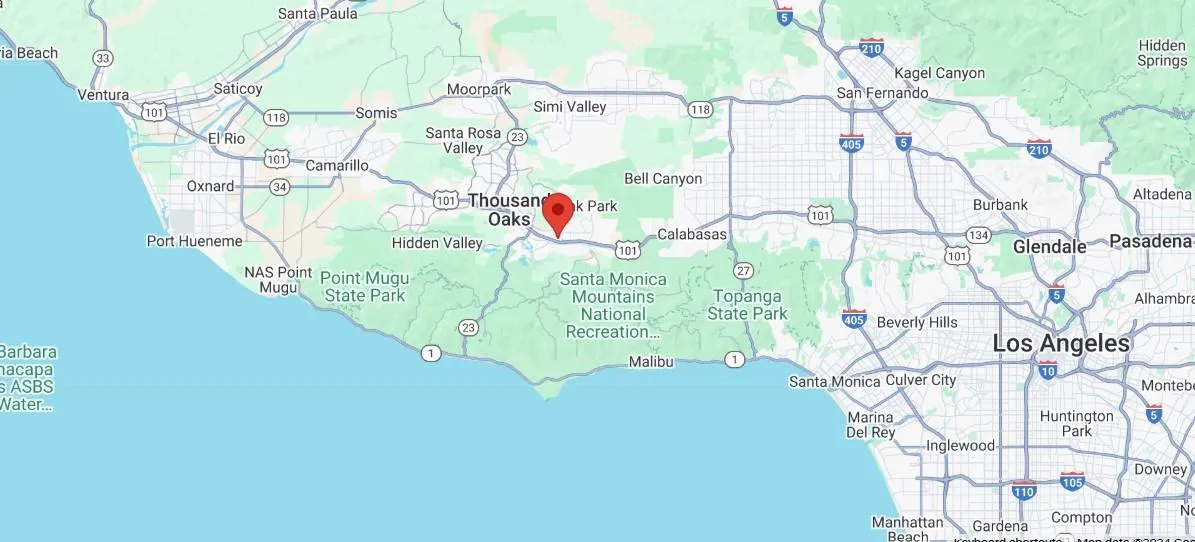
30721 Russell Ranch Rd Suite 140, Westlake Village, CA 91362
CUSTOMER CARE
Get In Touch
Mon – Thurs
10:00am – 4:00pm
Fridays by Appointment
Saturday, Golf
Sunday –hurch
LEGAL
Stay informed about how new technology can make or break a brand.
FOLLOW US


Restore. Protect. Recover.
© 2026 Water Damage Restoration Intelligence Academy | All Rights Reserved.
1. Water Damage Restoration Foundations
2. Water Mitigation, Assessment & Safety
3. Restoration Procedures & Project Planning
4. Advanced Drying Technologies & Moisture Management
5. Restoration Maintenance, Quality Control & Operations
6. Bonus Restoration Masterclass Series