How Professionals Find Hidden Water Damage
Author; S.Raj, M.D, Updated: 8/12/2026 Reading Time: 5 Minutes
Moisture Detection & Mapping
Imagine returning home after a water leak, only to find your floors and walls look dry, but weeks later, mold surfaces or wood begins to buckle. What you can’t see can cost you the most. That’s why discovering and mapping hidden moisture is at the core of every successful water damage restoration project.
Understanding Moisture Detection & Mapping in Water Damage Restoration
What You'll Learn From Professional Moisture Detection & Mapping
What moisture detection and moisture mapping are and why they're essential after water damage
The professional tools used for hidden moisture detection
How moisture mapping supports the restoration process
The risks of ignoring hidden water damage
Steps homeowners can take to ensure thorough damage restoration
Moisture detection and mapping are critical steps in water damage restoration because they reveal the true extent of water intrusion. While surface water may evaporate quickly, hidden moisture can persist deep within walls, floors, and building materials. Skipping this critical phase often leads to incomplete drying, hidden mold growth, and future structural problems. Restoration professionals use specialized tools and processes to assess both visible and concealed water damage, develop effective drying strategies, and document the findings for insurance purposes or repairs. This comprehensive approach not only protects property value but also safeguards occupant health by minimizing mold risk and ensuring repair work only begins when the affected area is truly dry.
The Role of Moisture Detection & Mapping
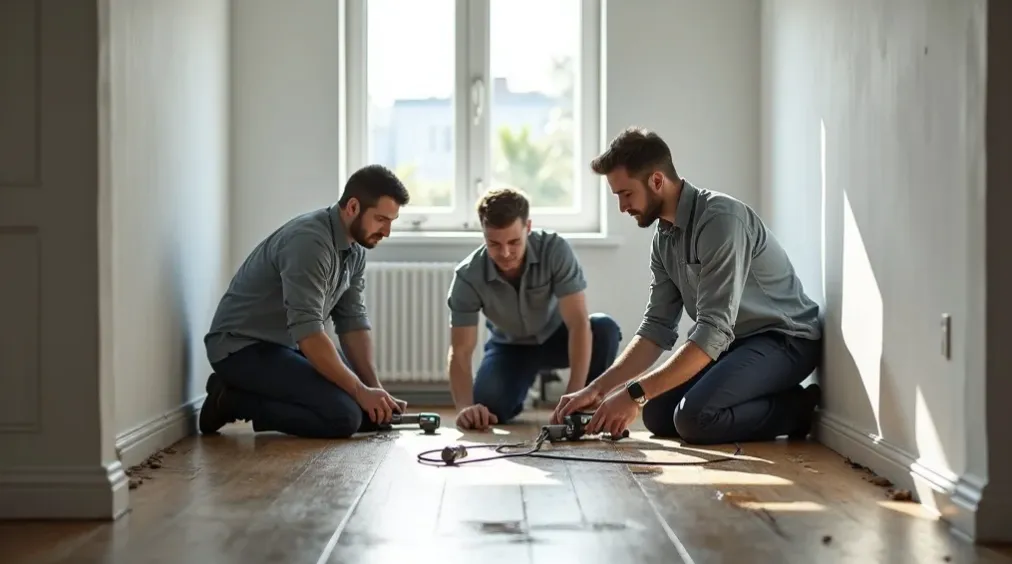
Professional moisture detection and mapping help identify hidden water damage so restoration teams can create a more accurate drying and repair plan.
What Is Moisture Detection?
Definition and Purpose of Moisture Detection & Mapping
Moisture detection in water damage restoration refers to the process of locating and measuring the concentration of water within building materials. Its purpose is to provide a precise assessment of both apparent and hidden water intrusion, guiding professionals to areas that require targeted drying and remediation. While a moisture map offers a visual representation of the affected area, the combination of detection and mapping forms the foundation of a strategic, science-based restoration approach. Tools like moisture meters and thermal cameras translate invisible threats into actionable data, allowing for accurate classification, drying, and eventual clearance of affected zones.
Why Visual Inspection Alone Is Not Enough
Visual inspection is an important first step in identifying water damage, but it’s limited by what the naked eye can detect. Many forms of hidden moisture, such as water behind walls, under floors, or within insulation, don’t produce visible symptoms right away. Relying solely on visual cues like stains, bubbling paint, or dampness often results in missed areas that remain wet beneath surfaces. Without precise moisture detection, these concealed pockets may contribute to mold growth, wood rot, and structural deterioration. Professional moisture detection & mapping leverage advanced instruments to uncover these trouble spots, ensuring that restoration work addresses both apparent and hidden threats.
The Difference Between Detecting and Removing Moisture
Detecting moisture is about identifying where water exists and understanding its extent within building materials. This data is gathered using tools and measurements that provide moisture content readings at different locations. Removing moisture, on the other hand, involves using drying equipment and dehumidifiers to actively reduce moisture levels until safe standards are met. Attempting to dry structures without first performing a thorough moisture detection risks missing problem areas—and increases the chance of secondary water damage or recurring moisture problems. In summary, detection is the investigative first step; drying is the corrective action informed by those findings.
Why Moisture Mapping Matters After Water Damage
Understanding Hidden Moisture and Its Consequences
Hidden moisture can remain trapped behind wood, drywall, and flooring long after standing water is gone. This lingering dampness creates the perfect environment for mold growth, weakens building materials, and may go undetected until extensive repairs are required. Moisture mapping provides a detailed outline—known as a moisture map—illustrating exactly which areas have elevated moisture and need specific attention during the restoration. By visualizing moisture boundaries, restoration pros can target drying efforts, avoid unnecessary demolition, and verify when structural drying assessment is complete. Without this step, invisible risks can jeopardize the entire water damage restoration process.

Water Damage and Structural Risks
Unchecked water damage weakens the structural integrity of your home. When water seeps beneath flooring or into framing, it can cause lumber to swell, warp, or rot. Over time, this could compromise beams, joists, or subfloors, leading to costly repairs and safety concerns. Professional moisture detection & mapping allow for early identification of at-risk materials, ensuring that these hidden dangers are addressed before major reconstruction is required. Proper mapping also allows for more accurate documentation when working with insurance providers and accelerates the damage restoration process by eliminating guesswork regarding the full scope of water intrusion.
Moisture Mapping and Mold Growth Potential
Mold spores thrive in environments with excess moisture. Even small areas of hidden dampness behind a wall or beneath carpeting can lead to mold colonies, introducing air quality issues and health risks for occupants. Moisture detection & mapping pinpoint those at-risk zones and ensure drying equipment is positioned for maximum effectiveness. By identifying and addressing moisture "hot spots," restoration professionals help minimize the likelihood of mold growth during or after the structural drying assessment. Skipping this step puts your home and its occupants at unnecessary risk.
Flooring and Subfloor Issues Revealed by Moisture Mapping
Floors often trap water beneath surface materials, making it nearly impossible to judge conditions by touch or appearance alone. Moisture mapping highlights areas where subfloors or joists remain wet—issues that can lead to buckling, warping, or persistent odors. Understanding these hidden conditions is essential for targeted water damage restoration, as removing affected flooring without full assessment may result in ongoing moisture problems. Professionals rely on data-driven mapping to recommend exactly what should be salvaged, replaced, or dried for long-term peace of mind.
How Professionals Perform Moisture Detection & Mapping
Step 1: Visual Inspection for Water Damage
Restoration experts begin with a visual inspection, searching for common signs of water intrusion such as discoloration, bubbling paint, soft drywall, warped flooring, or visible staining. This step provides a general survey of affected areas and helps guide more advanced moisture detection testing. Although valuable, visual inspection alone cannot reveal all moisture content or map the full affected area, particularly when water has traveled into concealed spaces. The findings from this step inform the selection and placement of advanced detection tools for the next phases of the water damage assessment.
Step 2: Moisture Measurement with Moisture Meters
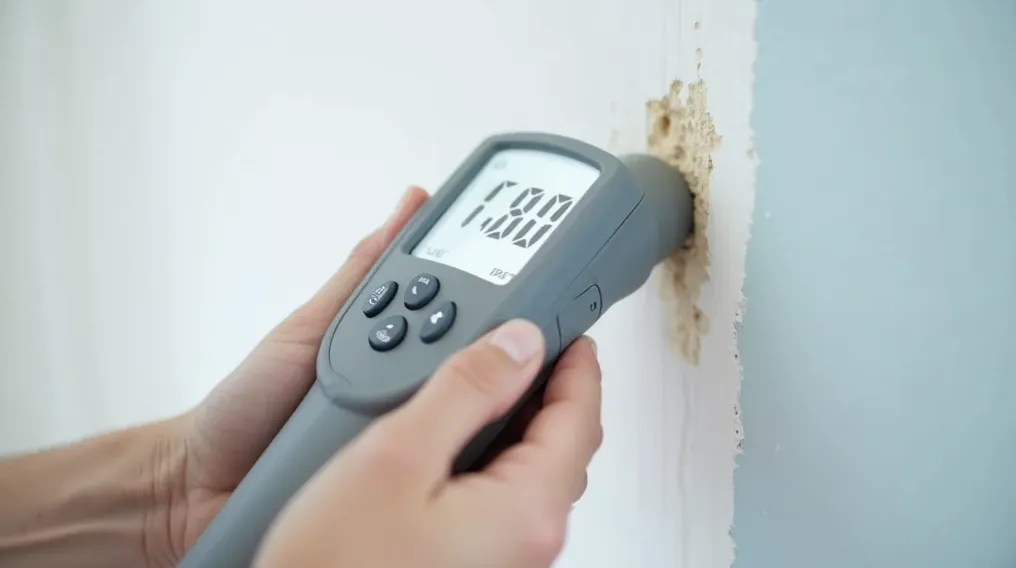
Moisture meters are essential tools for determining the exact amount of water present within various building materials. Technicians press the sensors against walls, floors, or ceilings to measure the percentage of moisture content, identifying both visible and hidden wet zones. Pin-type meters detect moisture inside materials using tiny metal prongs, while pinless models scan larger sections non-invasively. These readings create the foundation of a moisture map, pinpointing specific locations where drying or further investigation is required. Consistent moisture meter inspection ensures targeted restoration efforts, reduces the likelihood of overlooked pockets of dampness, and supports accuracy in insurance documentation.
Step 3: Material Testing and Sampling
Advanced water restoration inspection teams may conduct additional material sampling to identify the level of penetration or damage in flooring, insulation, or substructures. Samples are taken from various layers of an affected area, especially where indicators show elevated moisture levels. This step can include surface swabs, core samples, or probing specific construction features. Material testing supports both moisture detection and mold risk assessment by confirming which components must be dried, repaired, or removed, providing a clearer scope of restoration work, and preventing future complications.
Step 4: Thermal Imaging for Moisture and Water Intrusion
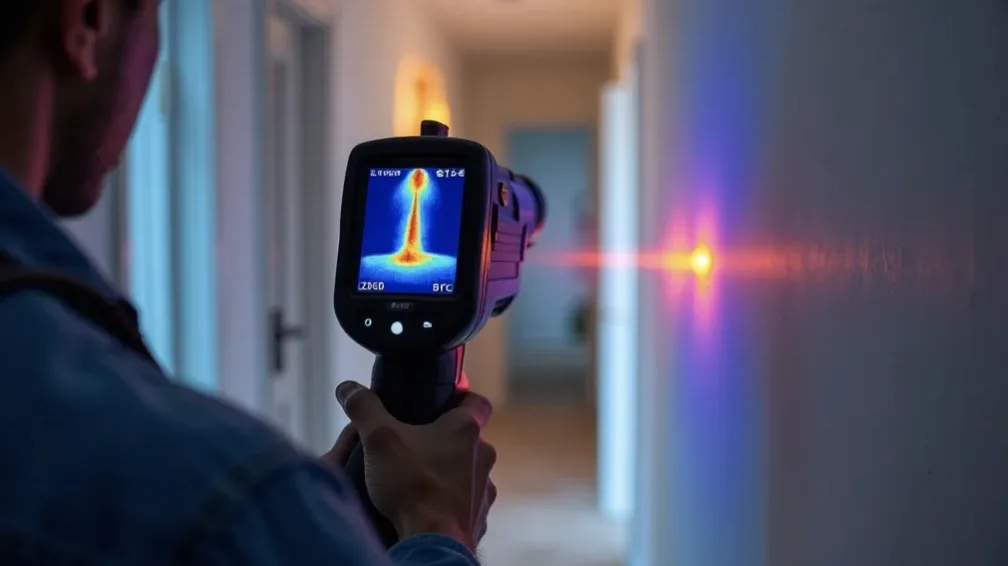
Thermal imaging devices scan surfaces and reveal temperature differences caused by moisture evaporation. Cold spots in thermal images frequently indicate wet insulation, drywall, or subfloor concealed behind seemingly dry finishes. Unlike traditional moisture meters, a thermal imaging water damage inspection covers wide areas rapidly and non-invasively, offering visual confirmation of hidden water intrusion. Professionals use thermal imaging cameras to supplement other data, map the migration of water within structures, and verify that dry-out progress is consistent across all affected zones. This technology is especially valuable for homeowners who need proof of full mitigation before starting repairs.
Step 5: Moisture Mapping of Affected Areas
The data collected from meters, imaging, and sampling is compiled into a detailed moisture map—a graphical representation of every spot with elevated moisture within the damaged structure. These moisture maps aren’t just diagnostic tools; they become the basis for restoration action plans, helping teams prioritize critical wet zones, adjust drying equipment placement, and confirm thorough coverage before signing off repairs. A professional moisture mapping approach ensures nothing gets overlooked, even if initial damage appeared minor. Homeowners can request copies of these moisture maps for future reference or insurance verification.
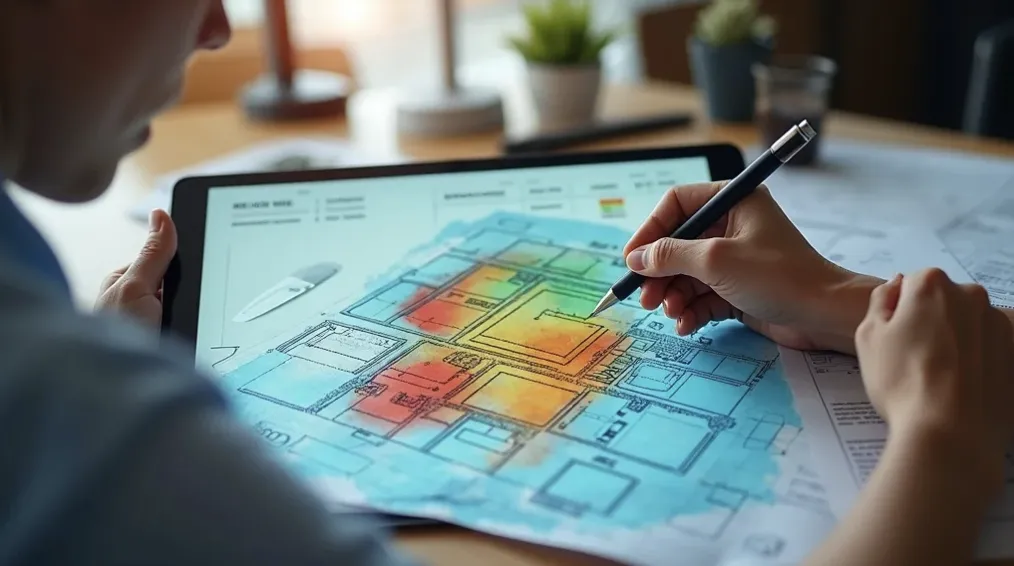
Step 6: Documenting Moisture Levels & Mapping Results
Precise record-keeping is critical in the water damage restoration process. Every reading, image, and map segment is logged in a restoration report—data which may be required for insurance claims or contractor verification. Moisture documentation makes the invisible visible, demonstrating where moisture was found (and later removed), supporting accountability across the entire drying process. It’s especially valuable if insurance adjusters require proof that the affected area was dried before repairs began, as it removes doubts or disputes about the work performed.
Step 7: Ongoing Drying Process Monitoring
Effective drying is not a one-time event, but a monitored process. Restoration teams regularly revisit the site to re-measure moisture levels, adjust equipment, and update moisture maps as conditions improve. This continual process ensures every part of the affected structure reaches safe, industry-standard dryness targets before approving repairs or reconstruction. Ongoing monitoring also provides homeowners with peace of mind, knowing that moisture detection & mapping have been leveraged to achieve a truly dry, healthy living environment.
Moisture Detection & Mapping Workflow Diagram
The professional moisture detection workflow typically follows this sequence: Visual inspection of all potentially affected areas. Use of moisture meters for point-specific readings in walls, floors, and ceilings. Spot-checks or material sampling for areas with ambiguous results. Thermal imaging scans to identify temperature differences linked to moisture migration. Compilation of a full moisture map showing the boundaries and moisture levels in each room. Documentation in restoration software or reports—with before/after comparatives. Ongoing drying process assessments to confirm progress and determine when it’s safe to rebuild. This workflow maximizes efficiency and accuracy, providing a step-by-step system that leads to better restoration outcomes.
Professional Tools Used for Moisture Detection & Mapping
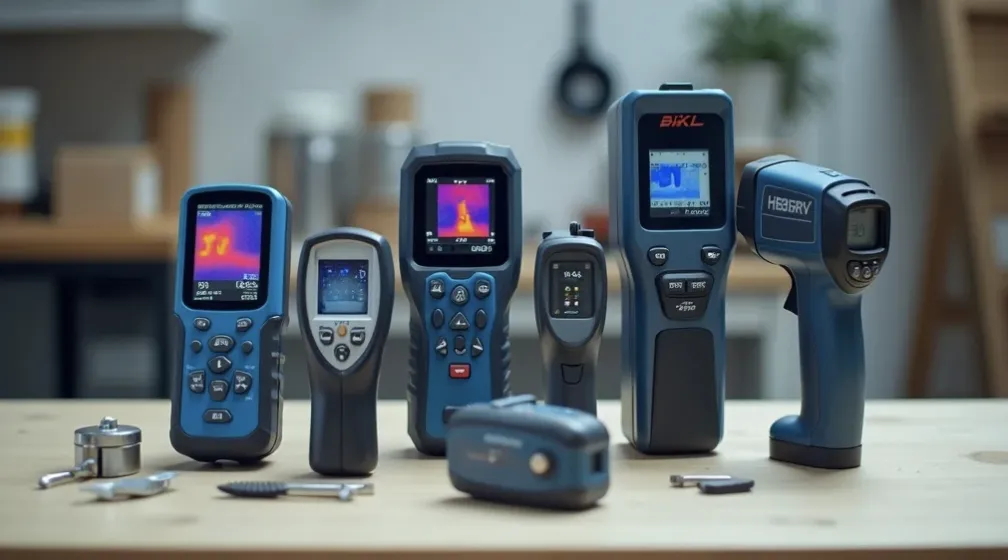
Moisture Meters: Purpose and How They Measure Moisture Levels
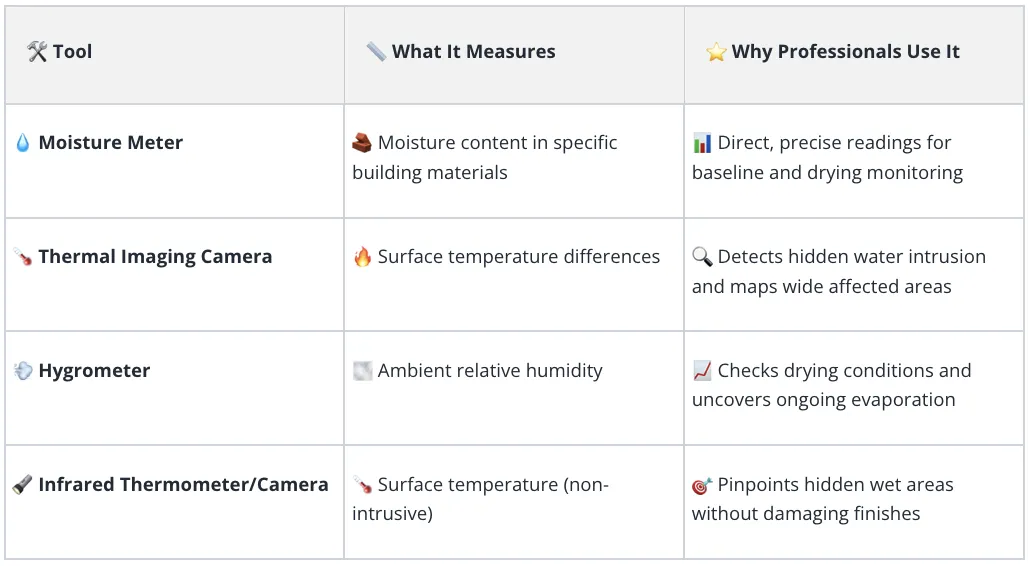
Moisture meters provide direct, quantitative readings of how much water content is present in various building materials. Using pin-type (penetrative) or pinless (non-intrusive) technology, these devices assess the percentage of moisture in woods, drywall, concrete, and more. By offering specific numbers, moisture meters establish a baseline and enable ongoing tracking of the drying process. Consistent, professional moisture meter readings are essential for confirming the effectiveness of structural drying and supporting insurance-related water restoration inspections.
Thermal Imaging Cameras: Detecting Temperature Patterns Caused by Moisture
Thermal imaging water damage detection relies on cameras that convert invisible heat patterns into visible color-coded images called thermograms. Areas with evaporating moisture appear cooler than dry surfaces, creating visual cues that pinpoint hidden dampness. These imaging cameras are indispensable for scanning large surface areas and detecting moisture behind finished walls, under floors, or even above ceilings—especially after significant water intrusion or flooding.
Hygrometers: Assessing Relative Humidity Indoors
Hygrometers measure indoor air’s relative humidity, providing clues to potential moisture sources and ambient drying conditions. High indoor humidity, especially after flooding or leaks, may signal ongoing evaporation or hidden wet materials. Restoration professionals use hygrometers to determine whether more aggressive drying equipment is needed—and to verify that the overall environment supports proper drying and mold control.
Infrared Technology for Accurate Moisture Inspection
Infrared cameras and thermometers support moisture detection by visualizing hard-to-reach areas and temperature changes. These tools help differentiate between cold spots caused by air drafts versus true wet zones, supporting advanced decision-making during the moisture inspection and mapping process. Infrared moisture detection is valued for its non-invasive approach, especially in historic properties or delicate finishes where physical probes could cause damage.
Table: Comparison of Moisture Detection Tools
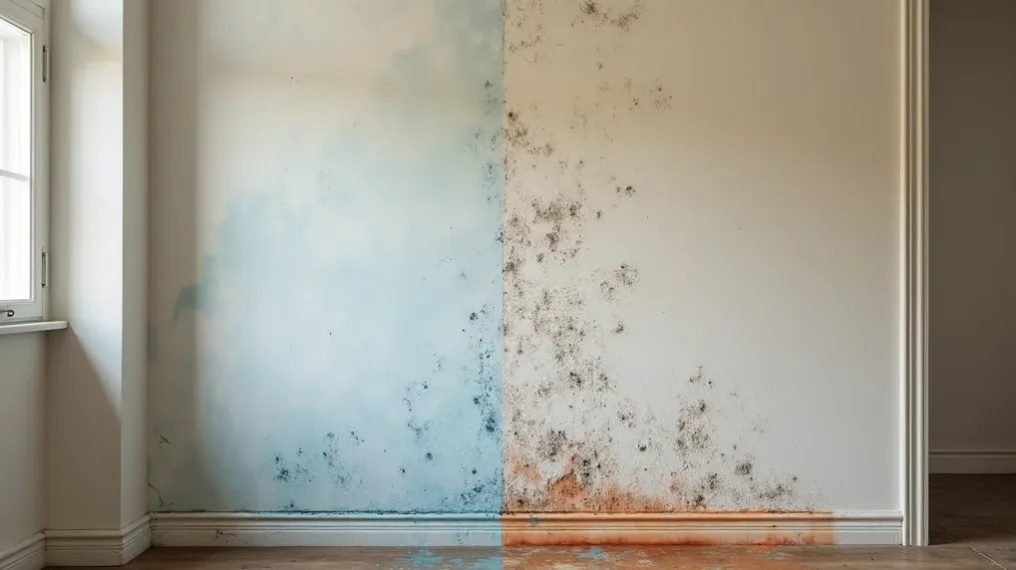
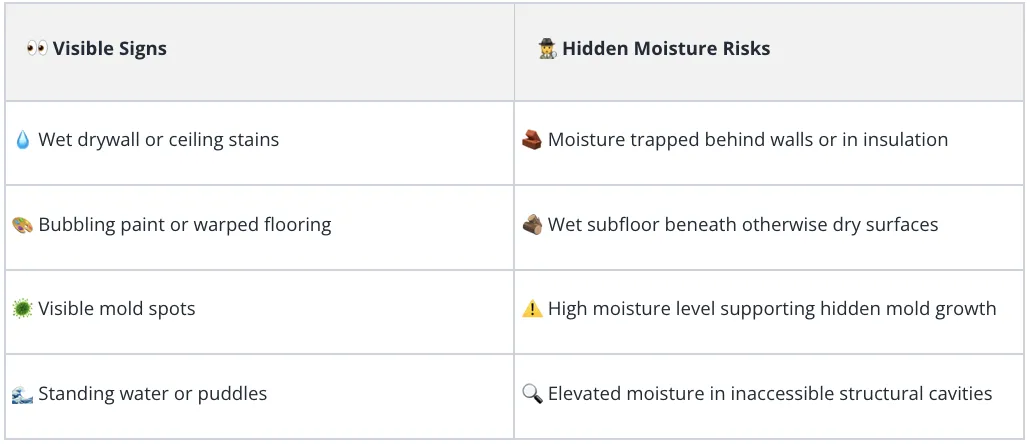
Visible Water Damage vs Hidden Moisture Risks
Identifying Visible Signs and Common Mistakes
Visible water damage is easy to spot—think of water stains on the ceiling, warped floorboards, or peeling paint. However, it’s a common homeowner mistake to assume that if an area looks dry, all moisture is gone. In reality, moisture can be trapped deep inside building materials, remaining undetected without a proper moisture inspection. Relying on sight and touch alone can lead to premature repairs, recurring mold, or costly structural issues. This is why professional moisture detection & mapping, using tools such as thermal cameras and moisture meters, is so important for a successful water damage restoration process.
Comparison Table: Visible Damage vs Hidden Moisture Risk Factors
Moisture Mapping During the Water Damage Restoration Process
Defining Moisture Boundaries for Better Restoration
One of the primary benefits of moisture detection & mapping is its ability to define the outer boundaries of water-damaged areas. A detailed moisture map illustrates which rooms, walls, or structural elements are affected—giving restoration professionals a "blueprint" for targeted drying and cleanup. Instead of guessing, teams can focus resources precisely where needed, optimizing efficiency and reducing the risk of missing concealed wet spots.
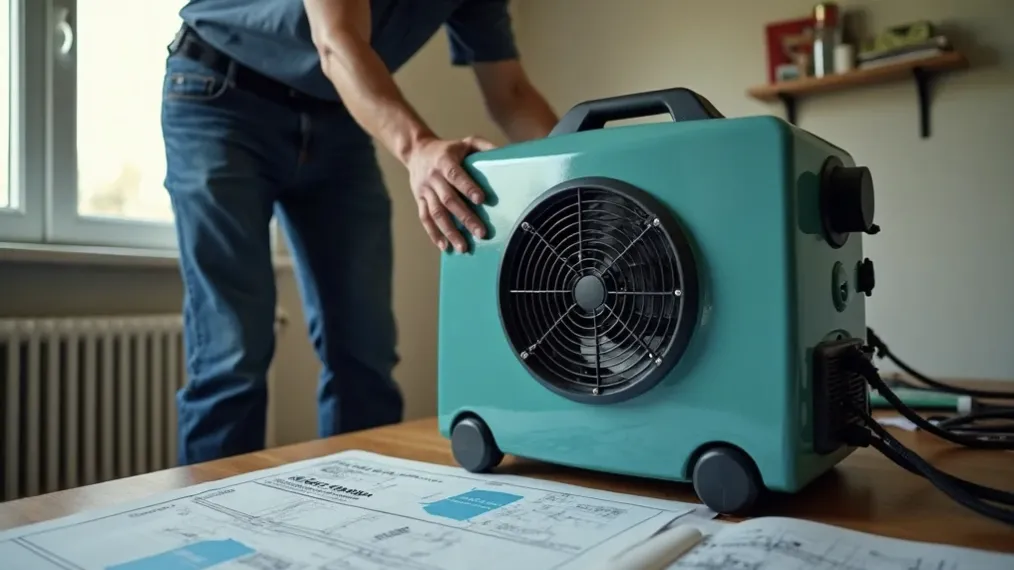
For a deeper look at how moisture meters are used in the field, including tips for accurate readings and common pitfalls to avoid, you can explore the comprehensive guide to moisture meter inspection on our site.
Recording and Documenting Affected Moisture Map Zones
During a professional moisture inspection, technicians record the exact readings at multiple locations, marking zones on digital floor plans or diagrams. This documentation creates an audit trail showing which materials were wet, how readings trended during the drying process, and when safe conditions were finally achieved. Accurate records support insurance claims, quality assurance, and accountability for all involved in the water damage restoration process.
Tracking Structural Drying Assessment with Moisture Mapping
Assessing the progress of the drying process requires tracking moisture levels over time. Technicians systematically re-measure affected areas daily and update the moisture map to visualize shrinkage of the wet zones. If an area remains stubbornly wet, additional equipment or techniques may be deployed. Only when all readings fall within acceptable industry standards will repairs commence, ensuring no residual moisture is left behind for future damage or mold growth.
Adjusting Equipment Placement Based on Moisture Readings
Moisture mapping enables restoration professionals to adjust dehumidifiers, air movers, and other drying tools dynamically based on precise readings. Rather than a “set it and forget it” approach, this process ensures that drying is uniform and comprehensive. Technicians might reposition equipment to intensify the drying of stubbornly wet regions, rebalancing efforts as the job progresses. Consistent moisture detections and updates prevent wasted time, energy, or incomplete results.
Verifying Drying Results Before Repairs Begin
Before any reconstruction or cosmetic repair work begins, professionals perform a final moisture inspection and mapping assessment. Verifying that all affected material is truly dry gives the homeowner the confidence that new paint, flooring, or finishes won’t be compromised by lingering dampness or future mold growth. This final check is the last—and most crucial—step in the restoration workflow, offering a clear green light for moving forward safely.
Common Homeowner Mistakes During Water Damage Restoration
Assuming surfaces that feel dry have no remaining moisture
Starting rebuilding or repairs before a full moisture inspection
Ignoring ongoing indoor humidity levels
Removing damaged materials without professional advice
Trying home remedies instead of structural drying assessment by experts
Each mistake can lead to recurring moisture problems, hidden damage, or shortened lifespan of repairs. Always seek a professional moisture inspection and mapping before initiating restoration work.
How Moisture Detection & Mapping Drive Better Restoration Outcomes
Accurate Work Scope and Drying Strategy
Professional moisture detection & mapping establishes the exact size of the task, guiding teams to create drying strategies tailored to your home’s unique conditions. This targeted approach avoids unnecessary demolition, limits disruption, and uses resources more effectively—making the entire restoration process smoother for homeowners.
Reducing Unnecessary Repairs with Detailed Moisture Mapping
When moisture mapping defines precisely which materials are wet, only those areas undergo repair or replacement—saving money and preserving undamaged finishes. Avoiding over-repair is especially important in historic or custom properties, where restoring materials to their original state may be costly or challenging.
Improved Reporting for Insurance and Documentation
Insurance adjusters frequently require evidence that affected areas were dried to industry standards before approving claims or repair reimbursements. Detailed moisture inspection documentation and maps create a transparent, defensible record that may speed up the resolution process and protect both property owners and contractors..
FAQs: Moisture Detection & Mapping in Water Damage Restoration
What is moisture detection in water damage restoration?
Moisture detection in water damage restoration is the process of locating, measuring, and tracking hidden water in building materials using specialized tools such as moisture meters and thermal imaging cameras.What is moisture mapping?
Moisture mapping is the process of creating a diagram or map that visually displays the areas of a property affected by moisture, supporting targeted drying and repair strategies.Why do restoration companies perform moisture inspections?
Restoration companies perform moisture inspections to uncover hidden water damage, validate drying progress, and document safe conditions for insurance and compliance.How do professionals find hidden moisture behind walls?
Professionals use moisture meters and thermal imaging cameras to detect temperature or moisture differences behind otherwise dry-looking surfaces.What equipment is used for moisture detection?
Equipment includes moisture meters, thermal imaging cameras, hygrometers, and infrared thermometers, all designed to assess hidden and visible moisture.Can thermal imaging cameras detect water damage?
Yes, thermal imaging cameras can reveal temperature variations indicating hidden moisture behind walls, floors, and ceilings after water intrusion.Are moisture meters accurate?
When used correctly, professional-grade moisture meters provide highly accurate readings of material moisture content to inform drying and repair decisions.How do professionals determine when an area is dry?
Technicians use repeated moisture measurements and compare them against industry standards to confirm the area has reached an acceptable dryness level.Can hidden moisture cause future problems?
Yes—undetected moisture can support mold growth and structural deterioration, leading to more extensive repairs and health risks if not properly addressed.When should homeowners request a moisture inspection?
Homeowners should request a professional moisture inspection after any leak, flood, or water damage event, or if they suspect lingering moisture issues.
Find the Right Water Damage Restoration Solution for Your Needs.
Don’t let hidden water damage threaten your property or peace of mind. Schedule a professional moisture detection and mapping inspection today for accurate, reliable results and expert advice before beginning restoration or repairs.
If you’re ready to take your water damage prevention and recovery knowledge even further, our main resource hub offers a wealth of expert insights on every aspect of water damage restoration. From advanced drying strategies to understanding insurance claims and long-term property protection, you’ll find actionable advice and in-depth guides to help you safeguard your home. Explore the full range of water damage solutions and restoration strategies to empower your next steps and ensure your property remains safe, healthy, and resilient for years to come.
S. Raj, M.D. /Bestwaterdamageusa.com
Director, Search Intelligence University/IABLEd
International Association for Business Leaders’ Education
Sources
https://certifiedwaterandfire.com/moisture-mapping/ - Moisture Mapping: The Complete 2025 Guide
Water Damage Restoration Performance Institute
The Definitive Curriculum for Water Damage Restoration, Mitigation, and Business Excellence.
Mitigare. Restituere. Protegere.
Mitigate. Restore. Protect.
Want Your World to Discover You,
the Easy Way?
Build your expertise in water damage restoration and unlock opportunities in the restoration industry.
We provide industry-focused education, practical training, and expert guidance to help you develop the knowledge and hands-on skills needed to excel in the fast-growing water damage restoration sector. Ask us how.
Copyright 2026. BEST WATER DAMAGE RESTORATION. All Rights Reserved.
* * * * *
COMPANY
30721 Russell Ranch Rd Suite 140, Westlake Village, CA 91362
CUSTOMER CARE
Get In Touch
Mon – Thurs
10:00am – 4:00pm
Fridays by Appointment
Saturday, Golf
Sunday –hurch
LEGAL
Stay informed about how new technology can make or break a brand.
FOLLOW US


Restore. Protect. Recover.
© 2026 Water Damage Restoration Intelligence Academy | All Rights Reserved.
1. Water Damage Restoration Foundations
2. Water Mitigation, Assessment & Safety
3. Restoration Procedures & Project Planning
4. Advanced Drying Technologies & Moisture Management
5. Restoration Maintenance, Quality Control & Operations
6. Bonus Restoration Masterclass Series